The hard part isn't building the system
It's obeying it when it tells you something you don't want to hear.
Everyone thinks the difficult part of systematic trading is building the system.
It isn’t. The rules are the easy part. You can write good rules in an afternoon. The difficult part comes later, on the specific day the system tells you to do something every instinct in your body is screaming against.
That’s the day the system is actually worth something. And it’s the day most people override it.
“You can write good rules in an afternoon. The difficult part comes later…”
December 2025
The market started falling. By February 2026 my system said one thing, plainly. No more longs.
I didn’t want to hear it. Nobody does. A correction is exactly when the trades look cheapest, when every dip looks like the bottom, when the pull to keep buying is strongest. The system was telling me to stop doing the thing that had been working, at the exact moment it felt hardest to stop.
So I had a choice, the only choice that ever actually matters in this work. Do I obey the system I built when I was thinking clearly, or do I override it now, when I’m not.
I obeyed it. I took almost zero longs from that point until the system said it was time to buy again. And instead of sitting fully exposed, I hedged with options through the decline.
The market corrected about 15 percent.
My equity dipped about 6.
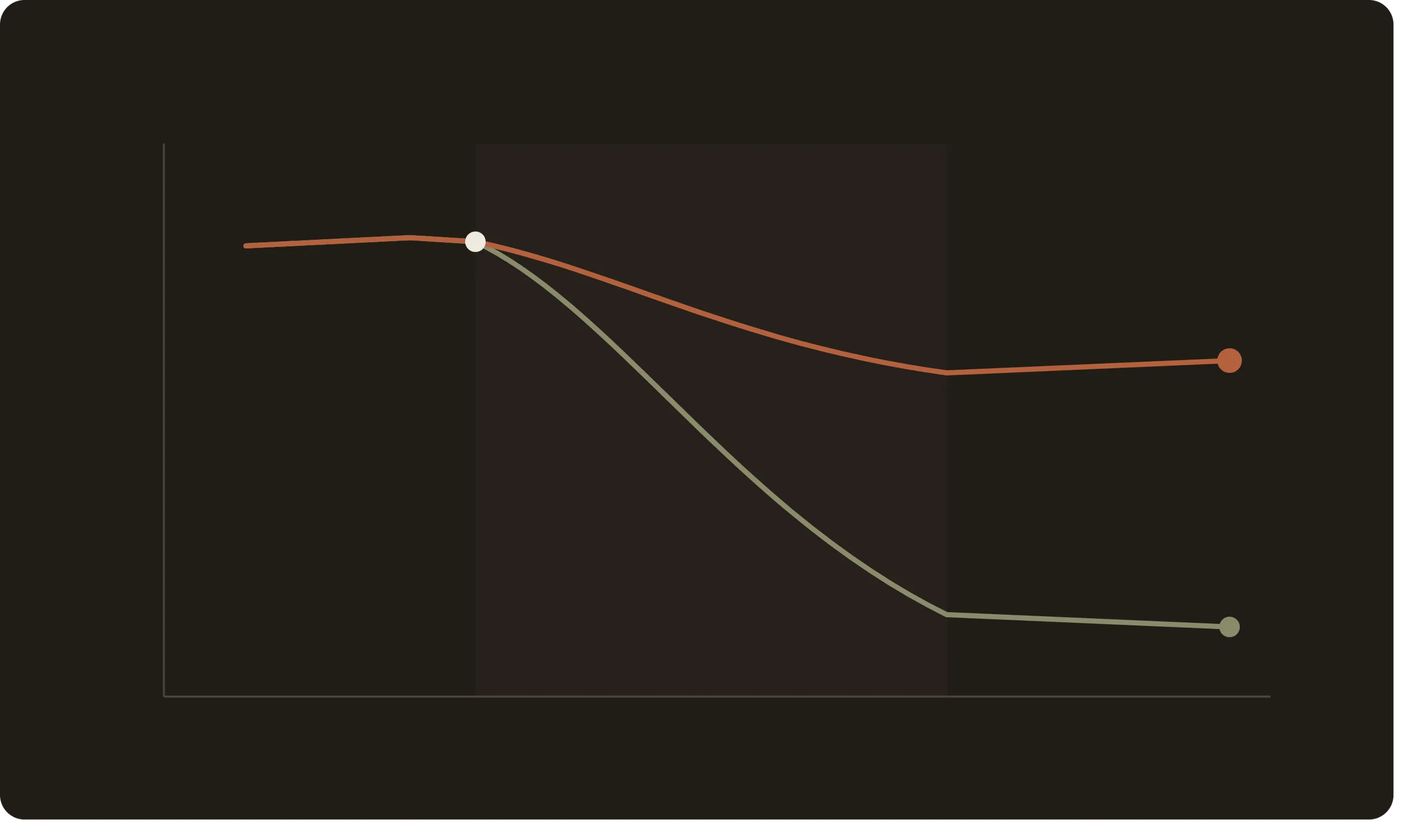
Obedience is the distance between these two lines…
That gap is the entire argument
Nine percentage points. That’s what obedience bought me. Not a prediction, not a clever call, not timing the bottom. Just doing what the system said on the day I didn’t want to.
The system didn’t know the future any better than I did. What it did was remove me from the decision at the moment I was least fit to make it. That’s the whole function of a system. It’s not there for the easy days when following it costs nothing. It’s there for the day your judgment is compromised by fear or greed and you need a version of yourself that decided in advance, when the head was clear, to overrule the version deciding now.
The system didn’t know the future any better than I did.
Building the rules is you at your best writing instructions. Obeying them is you at your worst being forced to follow the instructions your best self left behind.
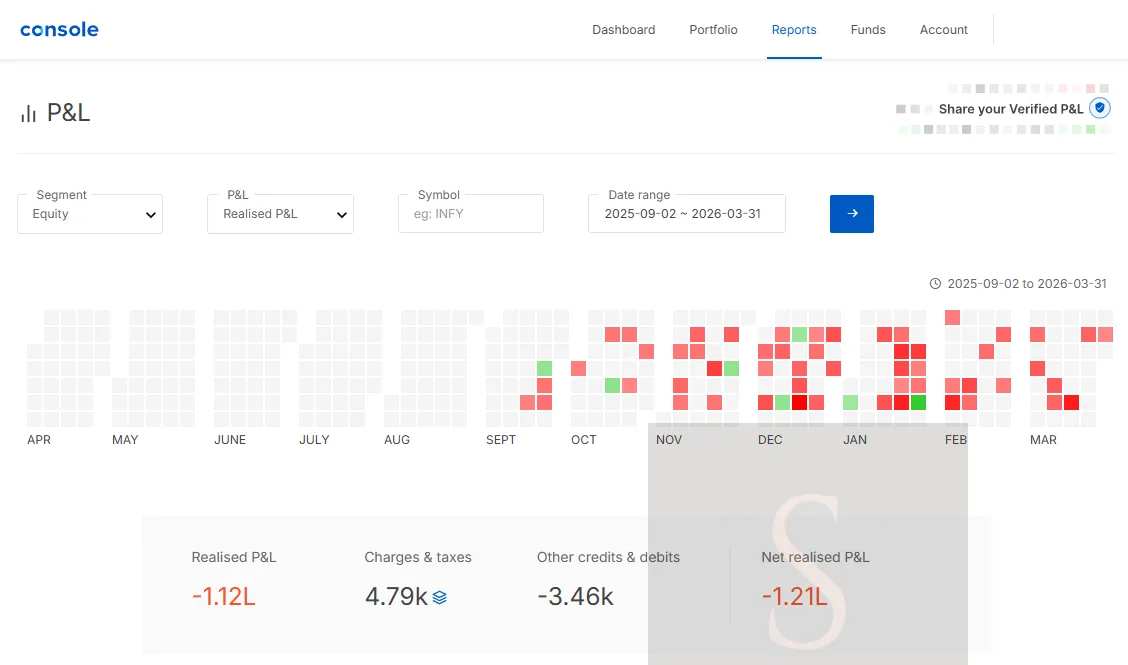
My Realized Net P&L in Equity -₹1.21 Lakhs. Note: Unrealized Number of that period is not available now.
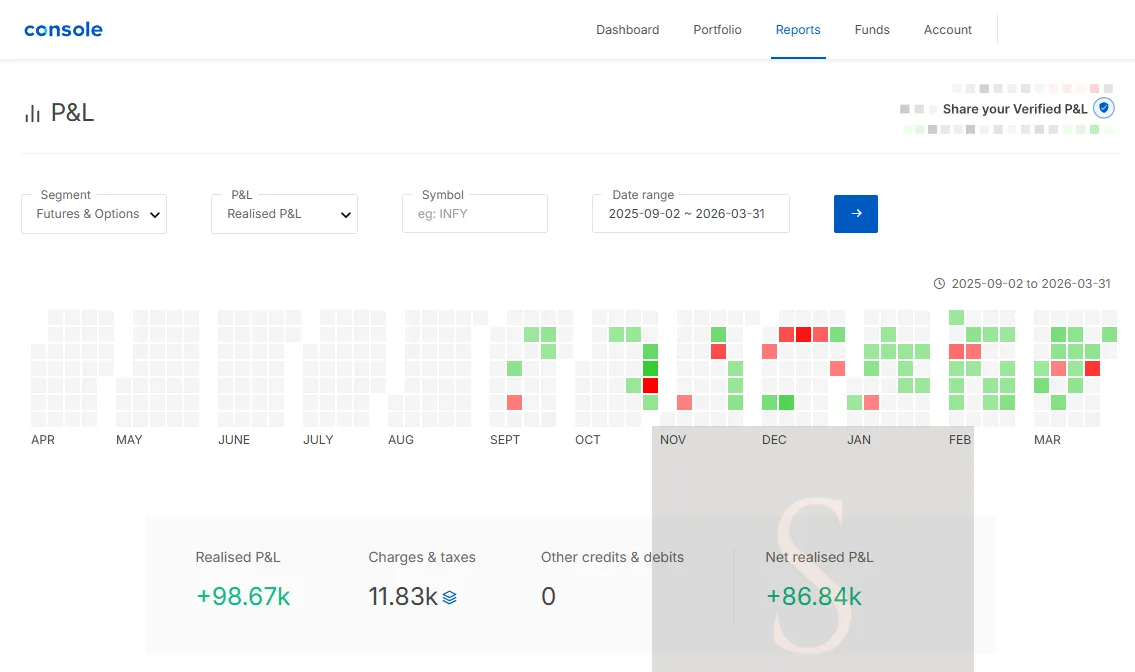
My Realized Net P&L in Futures & Options during the same period offsetting majority of my losses in Equity.
Automation doesn’t save you
The comforting story is that this is a manual-trading problem. Automate everything and the discipline problem disappears.
It doesn’t. It moves.
Check out my broker since forever
I’m not fully automated yet, so my demon shows up at the trade. But I’ve watched fully automated traders meet the same demon at a different door. The market corrects, the algo does exactly what it was built to do, and the operator tweaks it. Or turns it off. The correction that was too much for a manual trader’s nerves is too much for the automated trader’s nerves too, and he intervenes in the one moment he swore he’d leave it alone.
Automation doesn’t remove the discipline problem. It relocates it from the entry to the override switch. The hand that can turn the system off is the same hand that couldn’t resist the trade. You haven’t solved anything. You’ve just moved the temptation one step back and made it look like engineering.
The demon isn’t in the execution. It’s in you. The system’s only job is to make it expensive for you to listen to it.
I obeyed mine in February. The 9 percent I didn’t lose is the only proof that matters.
Nothing here is advice. I’m not your SEBI-registered advisor. This is how I think, not what you should do.